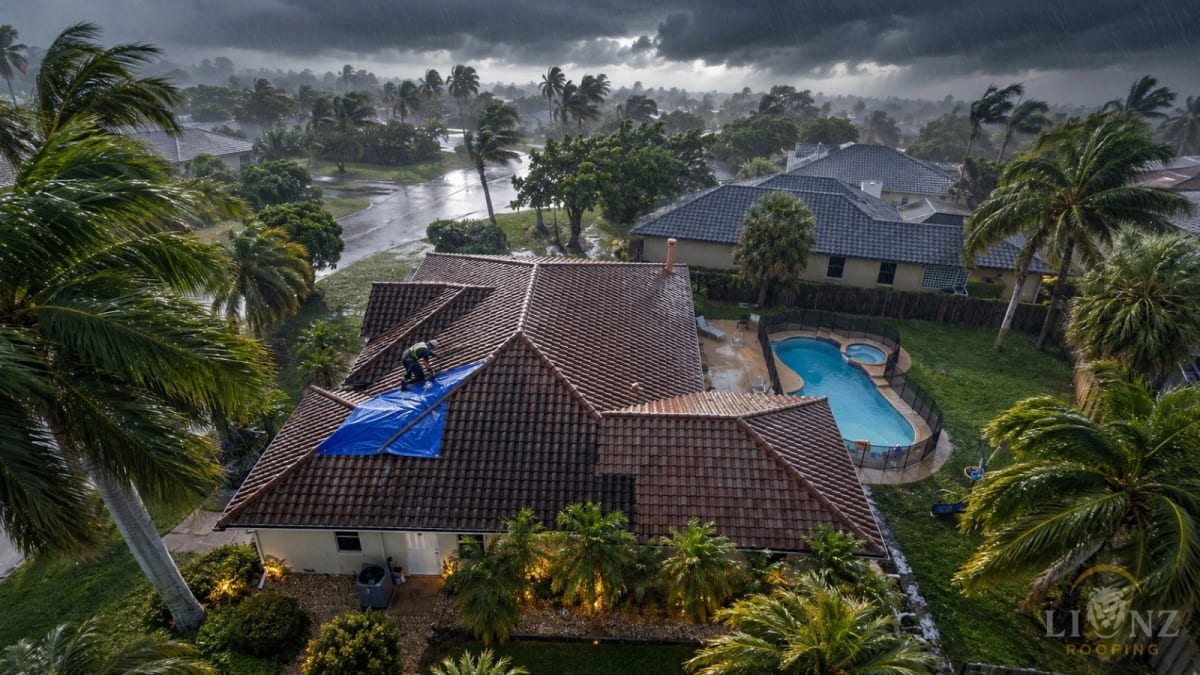
The Atlantic hurricane season runs through November 30, and October is historically one of the most dangerous months for South Florida roofs, because late-season storms often form in the western Caribbean and Gulf and track straight toward the peninsula. Many homeowners relax once September passes, but a roof that was only "good enough" for summer can fail in a single late-season storm.
At Lionz Roofing, we help homeowners and property managers across Fort Lauderdale and greater Broward, Miami-Dade, and Palm Beach counties get their roofs ready with a professional roof inspection and, when needed, fast storm damage repair. Here's why October still matters and what to check before the next system forms.
Why October Is Still a Real Threat in South Florida
The calendar can make the danger feel past, but the geography says otherwise. As the season moves into fall, storm formation tends to shift toward the western Caribbean and the Gulf of Mexico, which puts Florida closer to where storms develop and gives them less distance to travel before reaching land.
The record backs this up:
Hurricane Wilma made landfall in Southwest Florida on October 24, 2005, then crossed the state and caused widespread damage across Broward, Miami-Dade, and Palm Beach counties
Hurricane Milton struck Florida's Gulf Coast in October 2024, a reminder that a major hurricane can arrive well after the season's September peak
Neither storm followed the "peak season" script, and neither did the damage to roofs that came with them.
What Makes South Florida Roofs Vulnerable Late in the Season
By October, a roof has already been through months of stress, which is why late-season storms often expose problems that earlier ones only started:
Months of heat, UV, and daily storms wear down sealants, fasteners, and roofing surfaces
Earlier storms may have caused minor damage that was never inspected, leaving weak points for the next system to exploit
Wind uplift targets edges, ridges, and any loose or aging material first
Wind-driven rain pushes water under flashing and around penetrations that a normal rain would never reach
If your roof took a hit earlier this season, our guide on spotting hidden roof damage after a South Florida storm covers what to look for.
Pre-Storm Roof Checklist for October
You don't need to wait for a forecast to start. These checks are worth doing now, while the weather is calm:
Asphalt shingle roofs: look for curled, lifted, or missing shingles and exposed nail heads, since lifted tabs are the first place wind gets under the roof
Tile roofs: check for cracked, slipped, or loose tiles, which can become projectiles in high wind
Metal roofs: inspect fasteners, panel edges, and sealants, because loose or backed-out fasteners are a common starting point for wind damage
Flat roofs: look for ponding water, lifted seams, and cracked flashing, all of which get worse under heavy rain
Gutters and downspouts: clear debris and check for sagging or loose sections, since clogged gutters push water back under roof edges (our gutter repair team can fix problem sections before they fail)
Trees near the house: trim overhanging branches that could strike the roof or clog drainage
Attic: look for daylight, damp insulation, or stains that point to an existing leak
Roof Age, Code, and When Repair Isn't Enough
A roof that's near the end of its life is the most likely to fail in a storm. If an inspection shows widespread wear, a targeted repair may only delay the problem, and a full roof replacement can be the more cost-effective choice.
South Florida's building requirements are stricter than most of the country. Broward and Miami-Dade counties sit in the High-Velocity Hurricane Zone, so a replacement here has to meet HVHZ roofing standards designed for these exact storm conditions.
Don't Wait for a Storm to Be in the Forecast
Once a storm is tracking toward Florida, roofing companies fill up quickly and homeowners are left waiting. Scheduling an inspection now means any repairs can be done on a normal timeline instead of in a rush, and it gives you a documented record of your roof's condition, which can matter if you ever need to file a claim.
If a leak or damage has already started, don't wait. Our emergency roof repair team can help stop active water intrusion.
Serving Homeowners Across South Florida
Lionz Roofing is based in Fort Lauderdale and serves homeowners and property managers throughout Broward County, Miami-Dade County, and Palm Beach County. Our team works with the building codes and weather conditions that South Florida roofs actually face, from routine maintenance to full storm recovery.
Frequently Asked Questions
Is October still hurricane season in Florida?
Yes. The Atlantic hurricane season runs from June 1 through November 30, and October is still an active month for South Florida.
Has South Florida been hit by hurricanes in October before?
Yes. Hurricane Wilma crossed South Florida in October 2005, and Florida's Gulf Coast was struck by Hurricane Milton in October 2024. Late-season storms are a real part of the region's history.
What should I do to prepare my roof before a storm?
Schedule a professional roof inspection, clear gutters and drainage, trim nearby trees, and address any loose or damaged roofing materials before a storm is in the forecast.
Why shouldn't I wait until a storm is in the forecast to inspect my roof?
Demand for roofers rises quickly once a storm is tracking toward Florida, so schedules fill up and repairs get delayed. Inspecting and repairing now lets the work happen on a normal timeline.
Should I repair or replace my roof before the end of hurricane season?
It depends on the roof's age and condition. A newer roof with isolated damage is usually a repair, while an older roof with widespread wear may be better served by replacement. A professional inspection tells you which applies.
📞 Contact Lionz Roofing to schedule your free pre-storm roof inspection today.